Introduction
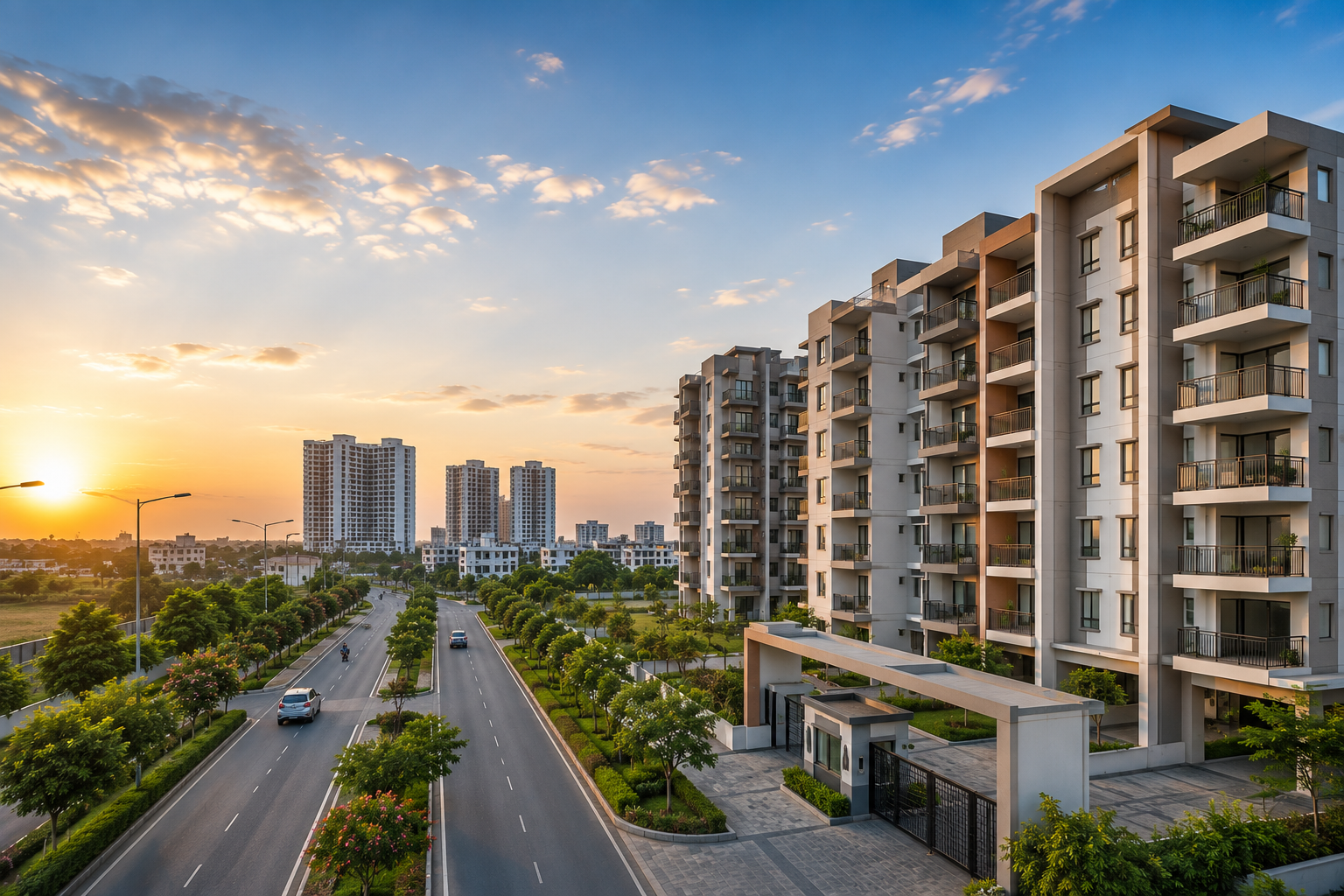
Buying a flat in Shadnagar is an option many homebuyers and investors are now considering as Hyderabad’s real estate growth fans outwards. Shadnagar combines affordability, improving infrastructure, and proximity to emerging industrial and logistics hubs, making it attractive to end‑users and long‑term investors alike. This guide explains current market trends, where prices stand, infrastructure developments, connectivity (including links to Hyderabad ORR and major employment centres), schooling and healthcare, buyer/investor perspectives, pros and cons, and practical steps to make a confident purchase.
Why consider a flat in Shadnagar?
Shadnagar has moved beyond being a peripheral town to a growth corridor with residential and commercial interest. It sits on major transport routes, attracting logistics, manufacturing and support services which bring jobs, rental demand and steady buyer interest. For buyers who want larger living spaces for a lower capital outlay compared with central Hyderabad, Shadnagar real estate can be an attractive choice.
Current real estate trends in Shadnagar
Price movement and appreciation: The market has seen consistent year‑on‑year appreciation in recent times as infrastructure projects and corporate investments push demand outward from saturated city centres. Buyers moving from costlier IT corridors often look to Shadnagar for more affordable square‑footage.
Product mix: Inventory includes a strong presence of plotted developments, gated villa projects and an increasing number of apartment projects (budget and mid‑segment). Developers are gradually bringing low‑to‑mid‑rise apartment complexes to serve rental markets and first‑time homebuyers.
Developer interest: Regional and national developers are launching projects with basic amenities to capture both end‑users and investors, giving more choices and standardized offerings.
Rental demand: With an expanding employment base in logistics and industrial parks, rental demand—especially for 1–3 BHK units—has been rising, improving the buy‑to‑let case for investors.
What prices actually look like (practical view)
Price brackets: Flats in Shadnagar generally cover a range from very affordable entry-level units to mid-range apartments and higher-end gated villas; the wide range reflects micro‑location, builder brand and amenities.
Typical per‑sqft guidance: Expect significantly lower per‑sqft rates than central Hyderabad IT corridors; prices tend to be more favorable for larger built‑up areas and plotted developments.
Example budgets: First‑time buyers commonly find compact 1–2 BHK flats or small apartments suitable for families or rental portfolios, while buyers seeking bigger homes favor 2–3 BHK options or villas in gated communities. Exact prices vary by project, floor area, and finish levels; always check current listings and verified sale deeds for up‑to‑date figures.
Transaction patterns: Ready‑to‑move stock commands a premium over under‑construction or pre‑launch projects, while plots typically show strong appreciation potential if they are HMDA/DTCP approved.
Connectivity and links to Hyderabad ORR and major hubs
Road network: Shadnagar is well served by national and state highways, including NH routes that provide direct and indirect connectivity to Hyderabad and other cities. This makes it convenient for logistics and commuting by car.
Hyderabad ORR (Outer Ring Road): Connections to the ORR shorten travel times to the Financial District, Hitech City and the airport, making Shadnagar accessible for professionals who commute occasionally to these employment zones. Improved link roads and proposed arterial upgrades further enhance this convenience.
Public transport: Bus services and intercity transport options connect Shadnagar to Hyderabad; frequency and last‑mile options improve as demand increases. Local shared mobility and cab services are increasingly available.
Future transport: Planned road widening, new link roads and potential feeder projects will further reduce travel friction and support faster commutes to employment clusters.
Proximity to IT hubs, Financial District, and growth corridors
Financial District and Hitech City: While Shadnagar is not adjacent to core IT hubs, better ORR connectivity makes commuting feasible for professionals who accept longer daily travel or hybrid work schedules. This proximity also raises demand from those working in the Financial District and Hitech City seeking affordable housing.
Nearby growth corridors: Shadnagar benefits from spillover growth from Hyderabad’s western and southern expansion corridors; industrial parks, logistics hubs and proposed special economic zones in the broader region help diversify local employment and support residential demand.
Infrastructure growth, schools, and healthcare
Civic infrastructure: Water supply, sewage and power infrastructure are improving in tandem with new residential projects, though some older pockets may still face intermittent service issues until upgrades are fully implemented. New township projects typically deliver better utility management than unplanned clusters.
Education: Families will find a growing number of schools—CBSE and state‑board options—in and around Shadnagar, plus plans for more institutional campuses as population increases. Proximity to reputed schools is a strong consideration for end‑users buying flats.
Healthcare: Clinics, diagnostic centres and multi‑speciality hospitals are expanding their footprint in the area, improving immediate access to primary and emergency care. This is important for buyers who prioritise healthcare proximity.
Retail and lifestyle: Commercial developments, supermarkets and local retail strips are appearing near new residential projects, increasing convenience for residents.
Investment potential and what to expect
Appreciation outlook: If infrastructure projects (highways, ORR links, industrial investments) continue as planned, Shadnagar’s capital appreciation potential remains positive, especially for HMDA/DTCP‑approved assets and projects by reputable developers.
Rental returns: Rental yields in emerging corridors often compete well with city‑centre options because purchase prices are lower while tenant demand grows. Targeting 1–3 BHK units near transit corridors generally improves rental prospects.
Risk and timelines: Expect a medium‑term horizon (3–7 years) for significant capital gains; short‑term gains are possible in micro‑locations with immediate infrastructure announcements. However, delays in project deliveries or transport upgrades can affect expected returns.
Buyer vs investor perspectives
Buyer (end‑user) viewpoint:
Priorities: Ready possession or near‑possession projects, good water/power reliability, schools and healthcare within reachable distance, and safe gated communities.
Decision tip: Prioritise completed projects or those by experienced builders to minimise delivery risk. Consider commute tolerance to workplaces and the availability of daily conveniences.
Investor viewpoint:
Priorities: Land and project approvals, builder reputation, proximity to upcoming infrastructure, and rental demand indicators.
Decision tip: Diversify across plots and apartments, verify RERA registration and title clearances, and plan for a holding period of several years to realise capital appreciation.
Pros and cons of buying a flat in Shadnagar
Pros
Affordability: Lower entry prices make it possible to buy larger homes or invest in multiple units.
Appreciation potential: Strong upside if infrastructure projects and corporate investments continue.
Growing local employment: Industrial, logistics and support services create both jobs and rental demand.
Availability: A mix of plots, apartments and villas gives buyers many choices for lifestyle and investment goals.
Cons
Commute times: Daily commutes to core IT hubs or the Financial District can be longer compared with inner suburbs; hybrid work helps mitigate this.
Infrastructure gaps: Some areas still need upgrades for consistent water supply, sewage and local roads until municipal works complete.
Project risk: Pre‑launch or under‑construction projects can suffer delays; careful due diligence is necessary.
Amenities timeline: Retail, schools and hospitals expand gradually; buyers in newly developed pockets may wait for full convenience.
Practical checklist before buying
Verify approvals: Confirm RERA registration, HMDA/DTCP approvals and clear land titles.
Developer track record: Research previous project delivery timelines, customer feedback and legal history.
Project status: Prefer finished inventory or late‑stage construction for lower risk; if buying pre‑launch, accept longer holding periods and higher due diligence.
Visit the site: Inspect the project at different times of day to assess noise, traffic and neighbourhood dynamics.
Costs and taxes: Factor in stamp duty, registration fees, GST (if applicable), maintenance charges, parking costs and any club membership or corpus fund contributions.
Rental analysis: If investing, check local rents for comparable units and expected tenant profiles (employees, students, families).
Financing and legal tips
Home loans: Compare interest rates, prepayment penalties, and loan processing fees across lenders; get pre‑approval to speed up purchase.
Document checklist: Ensure sale agreement, title certificates, sanctioned building plan, occupancy certificate (for ready units), and NOC documents (if applicable) are in order.
Stamp duty and registration: Complete legally required registration promptly to avoid disputes; keep certified copies of registered documents.
Future developments to watch
Road upgrades and ORR link projects: Any new ORR link or highway enhancements will faster connect Shadnagar to the Financial District and other employment hubs.
Industrial and logistics investments: New warehouses, manufacturing units and distribution centres bring jobs and rental demand, supporting residential absorption.
Township projects: Integrated townships with retail, education and healthcare amenities make local living self‑sufficient and tend to command a premium over standalone projects.
Public transport improvements: Increased bus frequency, regional rail links or feeder services as population grows will reduce commute friction and boost property attractiveness.
FAQs about buying a flat in Shadnagar
Is Shadnagar a good place to buy a flat?
Shadnagar can be a good choice if you prioritise affordability, larger living spaces and a medium‑term investment horizon; it’s suitable for end‑users and investors seeking growth from infrastructure and industrial development. Consider commute times and verify infrastructure readiness before deciding.
How much do flats in Shadnagar cost?
Prices vary widely by project, size and finish; Shadnagar typically offers lower per‑sqft rates than central Hyderabad corridors, making it possible to buy larger units for the same budget. Always check recent, verified listings and project brochures for current figures.
Should I buy a ready‑to‑move flat or a pre‑launch unit?
If you want low risk and immediate possession, choose ready‑to‑move units; pre‑launch units can offer discounts and higher upside but come with construction and delivery risks. Match your purchase type to your risk tolerance and investment horizon.
What returns can investors expect?
Investors can expect rental yields competitive with other emerging corridors and capital appreciation tied to infrastructure completion and employment growth; realistic holding periods are typically 3–7 years for meaningful gains. Returns depend on micro‑location, builder quality and market cycles.
: How is connectivity to Hyderabad’s ORR and Financial District?
Shadnagar is connected via highways and link roads to the ORR, which reduces travel time to the Financial District and other major employment centres; proposed and ongoing road improvements will further improve this linkage. Consider traffic patterns during peak hours to plan commutes.
What amenities should I prioritise when buying?
Prioritise reliable water and power, proximity to arterial roads, nearby schools and healthcare, security and transparent maintenance policies. For rental properties, choose units near transit routes and neighbourhood retail for better tenant appeal.
Conclusion
Buying a flat in Shadnagar is a decision that balances affordability, growth potential and commute tolerance. With increasing developer activity, industrial investments and improving road connectivity — including ORR links that make access to Hyderabad’s Financial District and IT hubs easier — Shadnagar presents a credible option for end‑users and investors aiming for medium‑to‑long‑term gains. Careful due diligence on approvals, builder reputation and project timelines will help you choose the right property with manageable risk.
Call-to-action
Ready to explore flats in Shadnagar? Contact our local property specialists today for verified listings, personalised comparisons, and guided site visits to find the right home or investment for your goals.
Frequently asked legal note
Always consult a qualified property lawyer and financial advisor before finalising large real estate transactions to ensure compliance with local norms, clear titles and optimal financing.
Ready to find your dream property?
Browse RERA-verified listings with complete transparency on knocKnock
Explore PropertiesRelated articles
Hyderabad Real Estate Market Trends and Investment Opportunities
Discover how real estate portals in India help buyers search, compare, verify, and evaluate properties with greater convenience and confidence.
Best Places to Live Near HITEC City in Hyderabad: Complete Guide for IT Professionals, Families and Investors
Discover the best residential areas near HITEC City, including Gachibowli, Kondapur, Madhapur, Kokapet, and Financial District, for living and investment.
Miyapur vs Bachupally: Which Locality Wins for First‑Time Homebuyers?
Confused between Miyapur and Bachupally? Compare affordability, connectivity, infrastructure, schools, and investment potential to choose the right location for your first home in Hyderabad.